
How Community Features Influence Modern Homebuyer Decisions
As more buyers enter the real estate market with evolving needs and expectations, the focus has widened from the home itself to the vibrant life outside its doors. Modern home seekers are highly attuned to the character and amenities of the surrounding neighborhood, often ranking these considerations above many interior features. For those exploring highly desirable neighborhoods, browsing homes for sale in Silver Lake comes with the added benefit of discovering a community that offers green spaces, lifestyle amenities, and strong social ties.
The importance of community amenities can’t be understated in today’s housing market. Features such as walkability, parks, and quality schools are now at the forefront of buyers’ minds. The search for the ideal home increasingly means the search for an ideal lifestyle—one that’s accessible, connected, and community-driven. Understanding these dynamics is crucial for buyers, sellers, and real estate professionals alike.
The Growing Importance of Community Amenities
Community features are no longer seen as bonuses—they’ve become essentials. A significant number of buyers are willing to make compromises on indoor amenities to live in a neighborhood that aligns with their lifestyle. A survey found that 88% of respondents would be flexible on home features in favor of a preferred community, showing how neighborhood qualities often influence the final decision. These priorities are sensible given the increasing demand for active and socially connected spaces. Homebuyers are increasingly looking for properties near communal parks, fitness paths, and gathering spaces—elements that promote both personal wellness and a sense of community. As the market continues to shift toward lifestyle-focused criteria, agents and sellers who highlight local amenities are well-positioned for success.
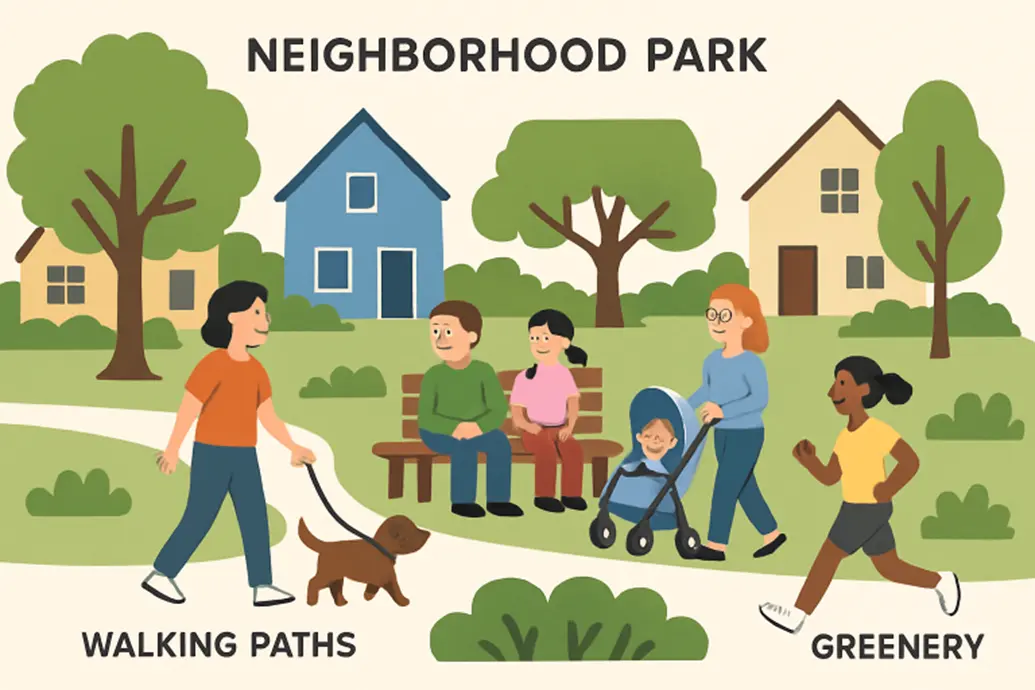
Walkability and Green Spaces
When examining what draws people to specific neighborhoods, walkability and access to nature stand out. Multiple surveys show Millennials and Gen Z buyers are primarily motivated by the ability to walk to cafes, markets, and recreational areas. Walkable neighborhoods foster not only healthier lifestyles but also stronger community bonds and higher property values.
The Value of Green Infrastructure
Parks, trails, and open spaces add real value to neighborhoods. Demand for homes in such locations continues to rise, with some suburban communities experiencing double-digit price increases. Green amenities don’t just provide room for recreation—they reinforce a neighborhood’s identity and support environmental health, making them a top draw for eco-conscious buyers and families.
Access to Healthcare and Educational Facilities
For many families and retirees, the availability of reputable healthcare facilities and high-performing schools is a non-negotiable requirement. Research consistently shows a positive correlation between proximity to well-rated schools and rising property values. Similarly, neighborhoods near quality medical centers tend to attract more interest and command a pricing premium. The assurance of readily accessible healthcare and education elevates both peace of mind and investment value for homeowners.
Technological Advancements in Homebuying
The process of evaluating neighborhoods is also getting a high-tech upgrade. Digital platforms and AI-driven recommendation engines, such as those on national listing sites, now offer deep insights into a community’s vibe, walk scores, crime rates, and even local event calendars. Virtual tours are supplementing—sometimes replacing—in-person neighborhood visits, providing buyers with a richer, data-driven picture before they ever set foot in a new area. The influence of AI is increasing and reshaping not just how buyers research homes, but how they visualize and engage with entire communities.
Emotional Connection to Community
Beyond the physical landscape, emotional connections play a key role in homebuyer decisions. People seek meaning and a sense of belonging, which neighborhoods with active homeowner associations (HOAs), community events, or strong volunteer networks often provide. Feeling socially connected and involved has a direct impact on well-being and happiness—a factor that many buyers consider alongside more tangible amenities.
Community Marketing: The New Standard
Real estate professionals have taken note, focusing marketing efforts on storytelling and testimonials that communicate neighborhood strengths. Portraying a genuine sense of community—through events, local businesses, and shared spaces—can spark emotional resonance, influencing prospective buyer decisions in ways that go far beyond a simple list of features.
Conclusion
Neighborhood features have become central—and sometimes decisive—to the homebuying journey. Elements such as walkability, open spaces, top-notch healthcare, and engaging digital tools are shaping what buyers expect and what they value most. For those evaluating new places to call home, considering these factors leads to more satisfying, future-proof decisions. For real estate professionals, promoting the benefits of community amenities is essential to connect with today’s—and tomorrow’s—buyers.
Also Read-Funny Fat Jokes and Roasts: The Ultimate Collection
